
Shipping a vehicle across Canada involves more than simply booking a pickup date. Spanning over 5,500 kilometres from British Columbia to Newfoundland, Canada’s geography, highway corridors, and seasonal weather patterns directly influence how your vehicle should travel. Whether you are relocating between provinces, buying a car from an out-of-province dealership, or coordinating commercial fleet transfers, understanding your car shipping options helps you balance budget, transit time, and vehicle protection.
At Optixtrace Car Shipping, we coordinate tailored vehicle logistics across every major Canadian corridor. In this guide, we break down the four primary vehicle transportation methods available in Canada—open carrier, enclosed trailer, railway transport, and flatbed hauling—so you can select the exact service that fits your vehicle and schedule.

Primary Vehicle Transportation Methods in Canada
Not every vehicle requires the same level of equipment or handling. When evaluating vehicle transportation methods, carriers generally categorize shipments into four distinct transport modes. Each method uses specialized trailers or railcars engineered for specific vehicle types, budgets, and distances.
Open Auto Transport
Vehicles are secured onto two-level open-air trailers capable of carrying seven to ten standard cars, SUVs, or pickup trucks at once. This is the standard method used by manufacturers and dealerships nationwide.
Enclosed Car Shipping
Vehicles travel inside a fully covered hard-sided or soft-sided trailer, shielded from rain, snow, road salt, gravel, and direct sunlight throughout the entire journey.
Rail Car Shipping
Vehicles are loaded into specialized enclosed multi-level railcars and transported between major Canadian rail terminals, often paired with local truck shuttles at either end.
Flatbed Vehicle Transport
Vehicles are loaded onto a single-level open deck without upper ramps or tight clearance constraints, making loading straightforward for oversized or non-running units.
Open vs. Enclosed Car Transport: Weighing Cost and Protection
For most individuals and dealerships researching how to choose a car shipping method, the primary decision comes down to open vs enclosed car transport. Both options utilize commercial highway carriers regulated under Transport Canada safety standards, yet they offer very different levels of environmental shielding and capacity.
How Open Car Transport Works
Our open car transport service is the most widely available and economical way to move a vehicle in Canada. Because a single multi-car hauler distributes fuel, driver, and equipment costs across multiple vehicles simultaneously, per-vehicle transport costs remain highly competitive.
Your car is safely driven onto hydraulic ramps and fastened at the wheels or chassis using heavy-duty soft straps designed not to scratch rims or strain suspension components. While your vehicle is exposed to normal highway weather—similar to driving it yourself—open carriers operate on frequent schedules along major routes such as Toronto to Vancouver car shipping and Calgary to Toronto car shipping, resulting in faster dispatch availability.
When Enclosed Car Shipping Is Worth the Investment
If you are wondering how to ship a luxury car safely during a Canadian winter or across gravel-prone mountain passes, enclosed car shipping provides complete isolation from the elements. Enclosed trailers typically carry between two and six vehicles, allowing drivers to dedicate extra time to loading, soft-tie securing, and interior floor protection.
Many enclosed carriers also feature hydraulic liftgates rather than steep angled ramps. A horizontal liftgate raises the vehicle level with the trailer deck, preventing front splitters, diffusers, or low-slung exhaust systems from scraping during loading and unloading.

Consider the season and highway corridor: If you are shipping a standard daily driver in July, open transport is almost always the smartest value. However, if you are shipping a collector vehicle or brand-new luxury coupe across Northern Ontario or the Rockies between November and April, enclosed transport protects paintwork and undercarriages from freezing slush and highway sand.
Car Shipping by Truck vs. Rail Across Canada
Canada’s vast transcontinental rail network makes rail car shipping a prominent option alongside highway trucking. Comparing car shipping by truck vs rail helps clarify which option aligns with your timeline and pickup location.
With rail vehicle transport, automobiles are driven inside fully enclosed bi-level or tri-level autorack railcars. These steel railcars shield vehicles from road debris and weather while moving efficiently across long interprovincial corridors linking British Columbia, Alberta, Manitoba, Ontario, and Quebec.
However, trains only travel between fixed railway yards. To bridge the gap between your home and the rail terminal, rail shipments either operate on a terminal-to-terminal basis or combine rail linehaul with local open-carrier pickup and delivery trucks. Highway trucking, by contrast, moves directly along the Trans-Canada Highway network without intermediate rail-yard transfers, which often simplifies scheduling for mid-distance routes or towns located away from major rail hubs.

| Feature / Factor | Open Truck Transport | Enclosed Truck Transport | Rail Car Shipping | Flatbed Transport |
|---|---|---|---|---|
| Weather & Debris Protection | Exposed to ambient weather | Full enclosed protection | Enclosed inside autorack railcars | Exposed to ambient weather |
| Relative Cost Tier | Most economical highway option | Premium rate for specialized equipment | Competitive for long cross-country hauls | Moderate to higher depending on size |
| Ideal Distance | Short, regional, and cross-country | Regional to cross-country | Long-distance interprovincial corridors | Local, regional, and specialized routes |
| Delivery Flexibility | Door-to-door or terminal | Door-to-door or terminal | Terminal-to-terminal (or truck-assisted) | Door-to-door or commercial yard |
| Primary Vehicle Types | Standard cars, SUVs, light trucks | Luxury, exotic, classic, collector cars | Standard passenger cars and SUVs | Oversized vans, lifted trucks, non-runners |
When Flatbed Vehicle Transport Is the Best Choice
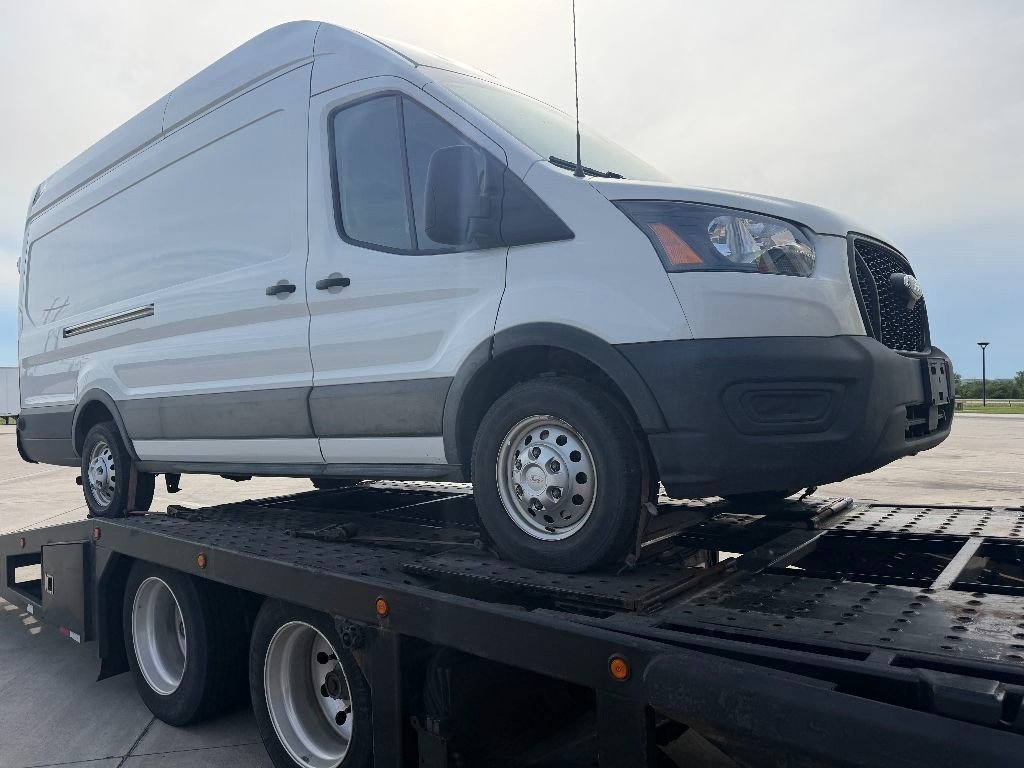
While multi-level haulers handle the majority of passenger cars, they have strict height, length, and ground-clearance limits. Flatbed vehicle transport solves these constraints by placing vehicles on a single unobstructed deck.
You should consider flatbed transport if your shipment involves any of the following scenarios:
- Commercial Vans and Work Trucks: High-roof cargo vans, utility service bodies, and dual-rear-wheel pickups often exceed the deck height or width slots of standard multi-car trailers.
- Lifted or Off-Road Vehicles: Trucks equipped with suspension lift kits, oversized mud-terrain tires, or roof-mounted racks fit cleanly on a flatbed without upper-deck clearance conflicts.
- Inoperable or Project Vehicles: If a vehicle cannot start, steer, or brake under its own power, a flatbed equipped with a heavy-duty winch can safely load and unload it without maneuvering up multi-tier ramps.
- Single-Vehicle Urgent Transfers: Businesses or dealerships needing dedicated point-to-point transport without waiting to consolidate a multi-car load often rely on flatbed carriers.
Door-to-Door vs. Terminal-to-Terminal Pickup and Delivery
Once you select the right trailer or rail method, you will also choose how your vehicle is handed off at pickup and delivery. Across our vehicle shipping services, customers typically choose between three convenient handoff models:
Door-to-Door Delivery
The carrier picks up and delivers your vehicle as close to your residential address or dealership as local municipal truck bylaws and street width safely allow.
Terminal-to-Terminal
You drop off your car at a designated storage facility or rail yard and collect it at the destination terminal, which can help lower overall transport costs.
Partial Door Service
Ideal when one end of your route is near a major terminal and the other is in a residential neighbourhood, combining terminal drop-off with doorstep delivery (or vice versa).
Keep in mind that commercial auto haulers can measure over 20 metres in length. If your street has low-hanging trees, tight cul-de-sacs, or commercial vehicle restrictions, your driver will coordinate a nearby wide-access meeting spot—such as a large retail plaza parking lot—to load or unload safely.
Which Car Transport Method Should You Choose? A Practical Checklist
Still weighing which car transport method should I choose? Walk through these five practical questions before requesting a quote:
- What is your vehicle’s market value and condition? Everyday commuters and family SUVs travel reliably on open multi-car haulers. High-value collectibles, freshly restored classics, and exotic sports cars warrant enclosed transport.
- Are there any physical modifications or mechanical issues? Measure ground clearance, overall height, and vehicle length. Note whether the vehicle runs and drives smoothly, as inoperable units require winch-equipped equipment.
- How far is the vehicle travelling? Short regional transfers—such as Vancouver to Calgary car shipping—are fast and direct by truck. Cross-country moves spanning 3,000+ kilometres may benefit from comparing open highway trucking against rail transport.
- What time of year are you shipping? Canadian winter road conditions, highway closures, and mountain pass weather tracked via resources like DriveBC or Ontario 511 can affect transit schedules and make enclosed protection more appealing.
- Are you relocating or buying a vehicle out of province? If you are registering a newly purchased car in another province, review provincial safety inspection rules and documentation requirements through the Canadian Council of Motor Transport Administrators (CCMTA) and your provincial licensing office before dispatch.

Frequently Asked Questions About Car Shipping Options
For most routes, open auto transport is the most budget-friendly highway option because multi-car carriers split operating expenses across seven to ten vehicles. For very long cross-country distances between major rail hubs, terminal-to-terminal rail car shipping can also offer highly competitive pricing.
Yes. Open multi-car haulers are the industry standard used by automotive manufacturers to deliver brand-new vehicles to dealerships across Canada. Vehicles are secured with specialized wheel straps and inspected at both pickup and delivery using a detailed Bill of Lading condition report.
Enclosed transport is recommended if your vehicle is a luxury, exotic, antique, or custom collector car, has delicate specialty paintwork, or features low ground clearance that benefits from hydraulic liftgate loading. It is also popular during harsh Canadian winter months.
Carrier policies vary by transport mode. Rail carriers generally require vehicles to be completely empty of personal items, whereas some highway carriers allow a modest amount of secured luggage below window level in the trunk. Always confirm personal item allowances with your coordinator prior to pickup so your shipment complies with carrier weight and safety rules.
Wash the exterior so any pre-existing scratches or dings are clearly visible during the pickup inspection, remove loose exterior accessories or toll transponders, check tire pressure and battery charge, and leave roughly a quarter tank of fuel so the vehicle can be loaded and unloaded without adding unnecessary weight.
Making a Confident Choice for Your Canadian Vehicle Shipment
Evaluating your car shipping options comes down to matching the right equipment to your vehicle’s build, your route, and your timeline. Open auto transport delivers dependable, cost-effective efficiency for everyday cars and SUVs; enclosed carriers safeguard luxury and collector vehicles from Canadian weather and road debris; rail transport moves vehicles economically across long transcontinental corridors; and flatbed trailers handle oversized or inoperable units with ease. By reviewing your options across Canada’s major vehicle shipping routes, you can arrange a smooth, predictable transport experience from pickup to final handover.
Looking to Ship Your Vehicle Across Canada?
Tell us your pickup city, destination, and vehicle details. Our Canadian vehicle logistics specialists will recommend the ideal transport method and provide a transparent, no-obligation quote tailored to your schedule.
Get a Free Car Shipping Quote