
When moving a car across provinces, standard multi-car haulers handle most everyday sedans, crossovers, and pickup trucks with ease. However, certain vehicles—and specific mechanical conditions—demand a different loading geometry and deck configuration. Choosing flatbed vehicle transportation ensures your car rests on a single, level, uninterrupted platform without navigating steep multi-tier ramps or driving onto the trailer under its own power.
Whether you are a private buyer purchasing a collector car out of province, a dealership transferring an inoperable trade-in, or an owner relocating a modified sports car with minimal ground clearance, knowing when to use flatbed vehicle transportation protects your asset from undercarriage scrapes, drivetrain strain, and loading hazards across Canadian highways.
How Flatbed Vehicle Transportation Works
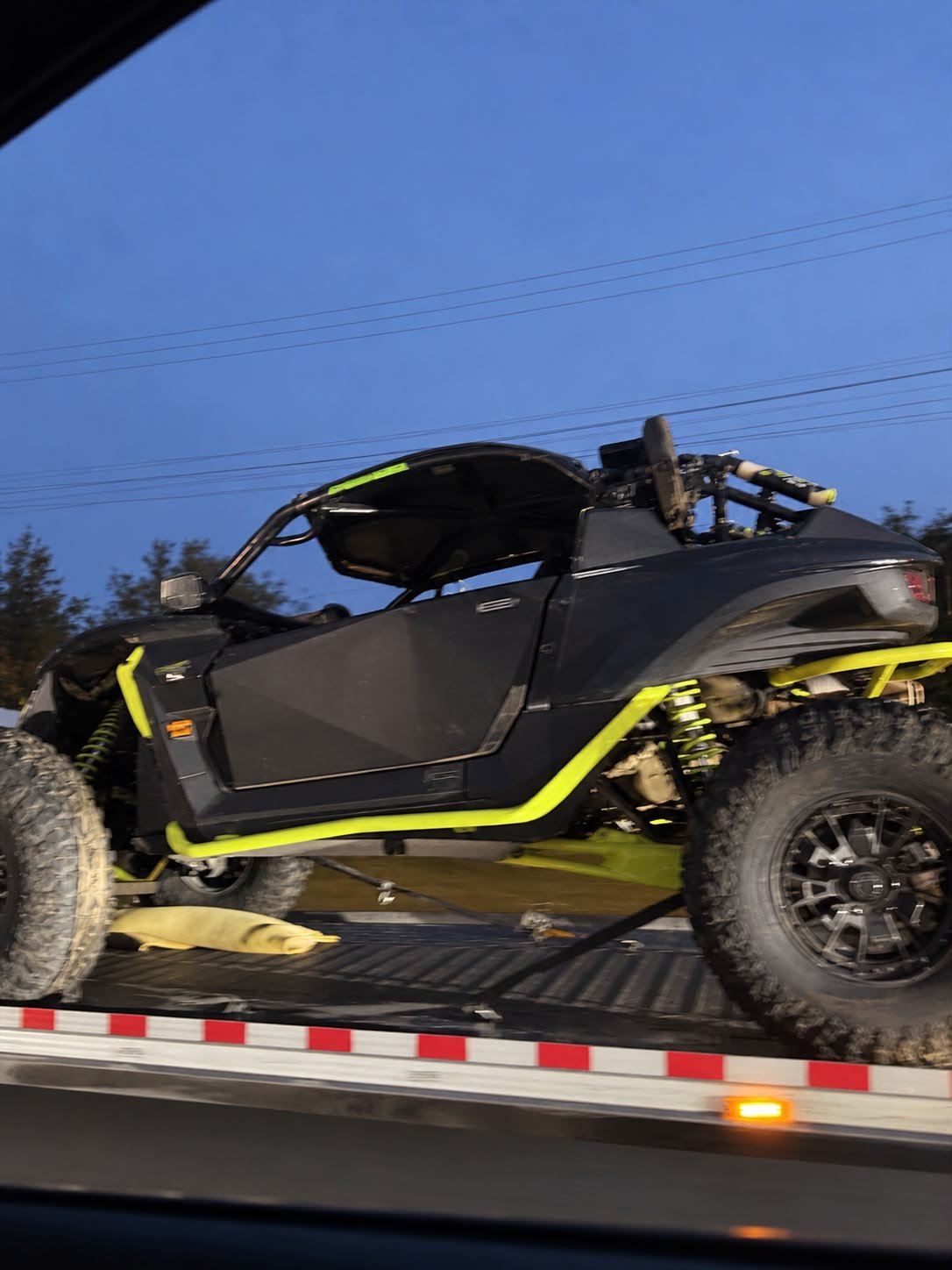
Unlike traditional double-deck auto carriers that stack seven to ten vehicles across upper and lower hydraulic ramps, flatbed car transport uses a single, flat, open-air platform. Depending on the route and distance, this equipment may be a dedicated rollback truck for regional moves or a step-deck and straight flatbed trailer hauled by a highway tractor for interprovincial corridors.
The defining advantage lies in the vehicle loading and unloading process. Rather than requiring a driver to steer the car up steep, angled metal tracks and weave between tight support posts, a flatbed deck either tilts hydraulically to meet the ground at a shallow angle or uses long, low-angle loading ramps. Vehicles that cannot roll on their own are smoothly pulled onto the deck using an integrated hydraulic winch and secured with wheel straps or soft tie-downs.
For customers exploring nationwide vehicle transportation services, understanding this mechanical difference clarifies why flatbed equipment is reserved for situations where standard multi-level loading simply is not practical or safe.
Key Scenarios: When Should You Ship a Car on a Flatbed?
Most daily-driven vehicles move efficiently via open transport, which remains the backbone of Canadian auto logistics. Still, several distinct scenarios make flatbed auto transport the preferred—or strictly necessary—solution.
Non-Running & Inoperable Vehicles
Standard multi-car haulers rely on vehicles being driven onto the trailer. If your car has a seized engine, transmission failure, dead electrical system, or locked brakes, flatbed vehicle shipping for non-running cars provides the winch capability needed for safe loading.
Low-Clearance & Modified Cars
Sports cars, lowered tuners, and vehicles fitted with carbon-fibre front splitters or side skirts easily scrape on standard carrier break-over angles. Flatbed transportation for low-clearance vehicles minimizes approach angles during loading.
Damaged or Auction Vehicles
When buying salvage or collision-damaged units from interprovincial auctions, exposed suspension components or leaking fluids make multi-tier stacking unsafe. A dedicated flatbed keeps the damaged vehicle isolated on a stable deck.
Oversized & Commercial Units
Extended-wheelbase vans, lifted trucks, dual-rear-wheel pickups, and specialized utility rigs often exceed the height or width clearances of standard multi-level racks, making flat-deck trailers the logical choice.
1. Non-Running Vehicles and Mechanical Failures
A common misconception in auto shipping is that any carrier can easily winch a dead car onto an upper deck. In reality, multi-level trailers have narrow wheel tracks, tight overhead clearances, and steep inclines that make winching an inoperable vehicle risky for both the car and surrounding cargo. When a vehicle cannot start, steer, or brake reliably, scheduling flatbed vehicle shipping ensures the operator has unobstructed space to align the winch cable and secure all four wheels without rushing.
2. Low-Clearance Sports Cars and Collector Vehicles
Vehicles with less than 12 centimetres (roughly 4.5 to 5 inches) of ground clearance face real risks on conventional hydraulic ramps. As the front wheels crest the hinge point between a loading ramp and a trailer deck, a low front bumper or diffuser can make contact with the steel surface. Flatbed equipment paired with extended race ramps keeps the incline gradual. If your priority is shielding a high-value exotic or vintage build from road grit and Canadian weather in addition to gentle loading, pairing low-angle loading with enclosed transport offers full side-and-roof protection.
3. Accident-Damaged Vehicles and Interprovincial Auction Purchases
Dealerships, body shops, and private rebuilders frequently source vehicles from salvage or wholesale auctions across Canada. If you are wondering whether flatbed transport is better for damaged vehicles, the answer is almost always yes. A car with bent control arms, deployed airbags, or compromised body panels cannot be stacked beneath other vehicles where debris might fall or fluids could drip. A flatbed trailer isolates the unit and allows the carrier to anchor directly to intact structural points or intact wheels.
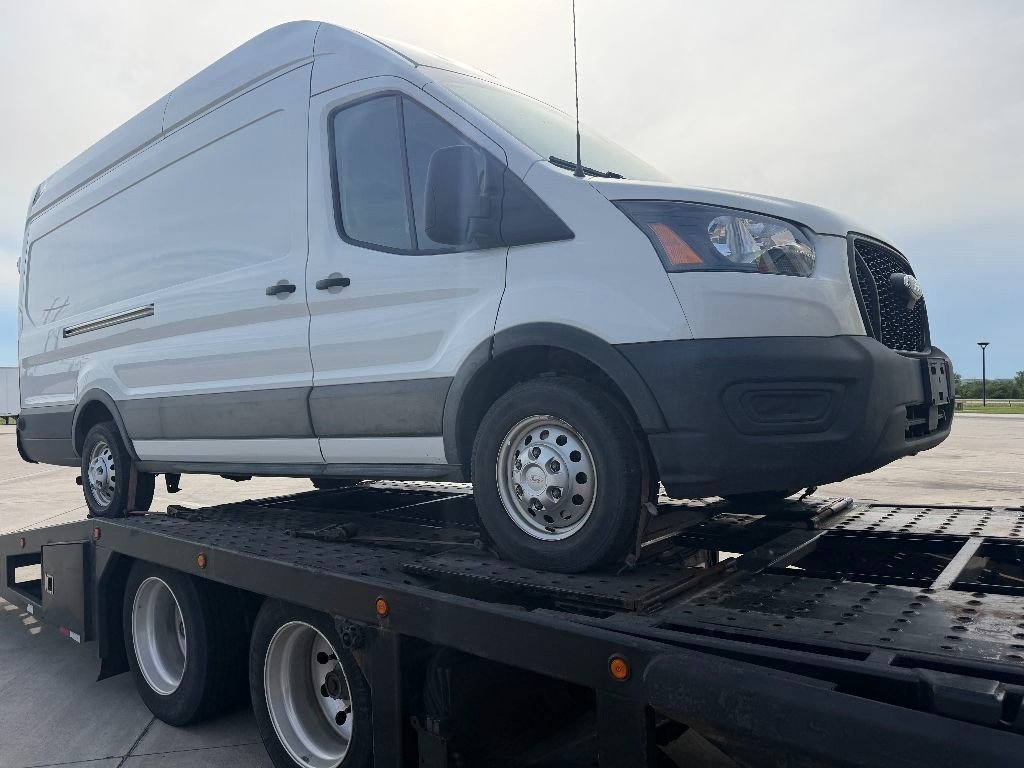
4. Oversized Vans, Lifted Trucks, and Specialty Equipment
Standard multi-car haulers are engineered around the dimensions of factory passenger cars and light-duty SUVs. Once you add roof racks, commercial ladder shelving, oversized mud-terrain tires, or high-roof cargo van bodies, height limits set by provincial highway regulations quickly come into play. Because a flatbed trailer lacks an upper deck overhead, it accommodates taller profiles cleanly while staying within legal highway clearance limits outlined by Transport Canada and provincial ministries.
Flatbed Towing vs. Transport: Understanding the Difference
Customers researching flatbed car shipping often confuse local flatbed towing with long-distance flatbed vehicle transportation. While both rely on a flat deck, they serve entirely different logistical purposes across Canada.
- Distance and Equipment Class: Local towing companies operate single-vehicle rollback trucks designed for short-distance roadside recovery within a city or neighbouring municipality. Long-distance flatbed auto transport uses heavy-duty highway tractors pulling multi-axle flatbeds or step-decks engineered for sustained cross-province mileage.
- Pricing Structure: Tow operators charge a base hook-up fee plus a per-kilometre rate that quickly becomes cost-prohibitive beyond 100 to 150 kilometres. Interprovincial flatbed transport is priced based on lane capacity, axle weight, deck space occupied, and corridor demand.
- Cargo Securement and Documentation: Professional auto transport carriers use four-point over-the-tire wheel straps or frame-specific tie-downs rated for highway vibration, accompanied by a formal Bill of Lading and condition inspection report at both origin and destination.
For regional transfers—such as moving a specialty vehicle along shorter provincial corridors like Toronto to Ottawa car shipping or Vancouver to Kelowna car shipping—coordinating with a dedicated vehicle logistics provider saves significant cost compared to paying emergency tow rates over several hundred kilometres.
Comparing Flatbed Transport With Other Shipping Methods
Selecting the right transport method comes down to balancing your vehicle's mechanical condition, ground clearance, value, and budget. Alongside flatbed options, Optixtrace coordinates standard open carriers and rail transport for long-haul cross-country moves where vehicles are operable and meet standard railcar clearance profiles.
| Feature | Flatbed Vehicle Transport | Open Multi-Car Hauler | Enclosed Carrier |
|---|---|---|---|
| Best For | Non-running cars, low-clearance vehicles, damaged units, oversized vans/trucks | Everyday running sedans, SUVs, crossovers, and standard pickup trucks | Exotic, vintage, collector, and high-value luxury vehicles |
| Loading Method | Low-angle ramp or hydraulic tilt deck with winch capability | Drive-on multi-tier hydraulic ramps | Hydraulic liftgate or low-angle enclosed ramps |
| Weather Exposure | Open-air deck (exposed to elements) | Open-air trailer (exposed to elements) | Fully shielded from rain, snow, road salt, and debris |
| Non-Running Support | High — built for winch loading and unloading | Limited — typically requires operable vehicles | Moderate — available via winch on select trailers |
| Ground Clearance | Accommodates very low clearance with extended ramps | Standard factory ride height required | Ideal for ultra-low sports cars via horizontal liftgates |
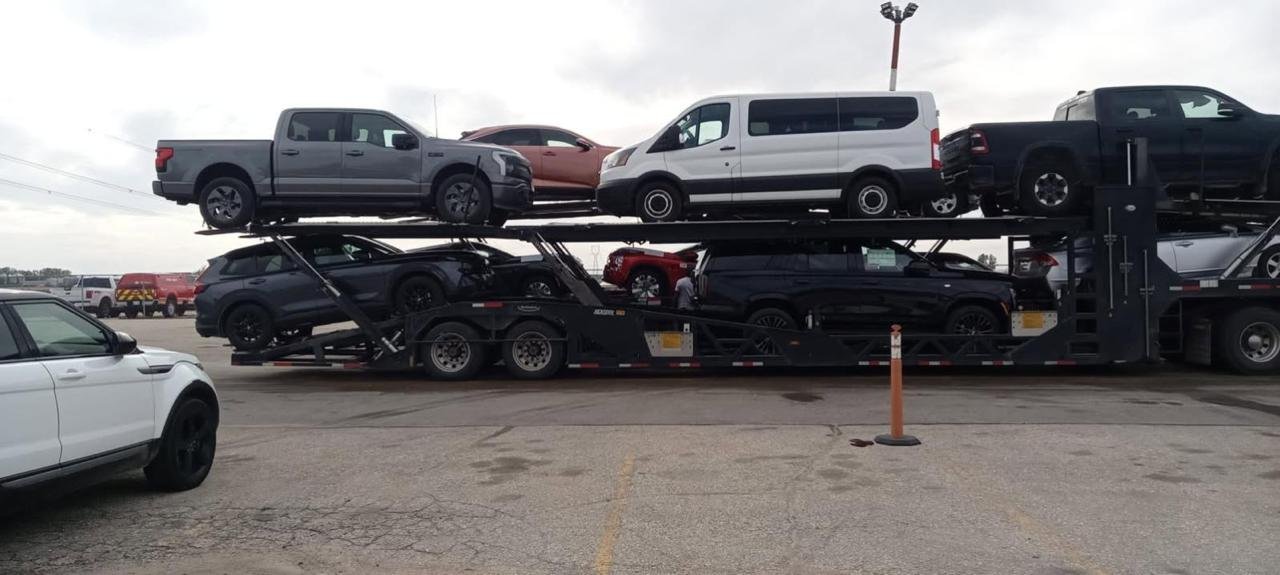
If you are relocating across Canada and your vehicle runs smoothly with standard ride height, an open carrier or cross-country rail corridor will usually deliver the best value. For instance, high-volume long-haul lanes like Toronto to Calgary car shipping rely heavily on multi-car equipment for everyday vehicles, while reserving flatbed capacity for inoperable, modified, or commercial units.
How to Prepare Your Vehicle for Flatbed Shipping
Proper preparation prevents loading delays and ensures accurate condition documentation on pickup day. Whether you are arranging car shipping across Canada from a residential driveway, a dealership lot, or an auction yard, follow these practical steps before the carrier arrives:
- Document Mechanical and Rolling Status Honestly: Inform your transport coordinator whether the car starts, shifts into neutral, steers, and holds brake pressure. Accurate disclosure ensures the dispatched flatbed truck carries the appropriate winch, straps, or wheel skates.
- Measure Ground Clearance and Modifications: If your vehicle has aftermarket coilovers, air suspension, front lips, or side skirts, measure the lowest point from the pavement and note any extended overhangs.
- Verify Accessibility for Heavy Equipment: Highway flatbed trailers require wide turning radii and overhead clearance free of low tree branches or utility wires. If your street restricts commercial trucks, arrange a nearby wide avenue or commercial parking lot for smooth loading.
- Remove Loose Exterior Parts and Personal Cargo: Secure or remove detachable spoilers, loose trim on damaged vehicles, and personal belongings inside the cabin. In Canada, carriers comply with strict axle-weight limits enforced under commercial motor vehicle standards such as the Commercial Vehicle Safety Alliance (CVSA) inspection guidelines.
- Complete a Thorough Pre-Trip Walkaround: Wash the exterior if the car is operable so existing stone chips or scuffs are clearly visible. Take timestamped photos from all four corners before signing the Bill of Lading at pickup, and repeat the inspection during vehicle handover at delivery.

Planning seasonal shipments across Canada also benefits from checking provincial highway conditions—especially during winter across the Rockies, Prairies, or Northern Ontario—using official resources like DriveBC or Ontario 511, alongside federal weather updates from Environment and Climate Change Canada.
Frequently Asked Questions About Flatbed Vehicle Transportation
Both transport methods are safe when handled by licensed, insured carriers, as vehicles are strapped down at all four wheels rather than driven on the highway. Flatbed transport becomes safer specifically during loading and unloading for low-clearance, damaged, or non-running vehicles because there are no steep upper-deck ramps or overhead structures to navigate.
No. Standard flatbed trailers are open-air decks, meaning your vehicle remains exposed to weather and highway spray just like an open multi-car carrier. If you need full protection from Canadian winter road salt, gravel, or precipitation, enclosed transport is the appropriate choice.
Yes, provided you notify your logistics coordinator in advance. When a vehicle cannot be shifted into neutral or steered due to missing keys or mechanical damage, the carrier can utilize wheel skates, dollies, or specialized loading equipment to move the vehicle onto the flatbed safely without dragging locked tires.
Multi-level car haulers divide fuel, driver, and highway operating expenses across seven to ten vehicles per trip. Because flatbed trailers carry far fewer vehicles per load—and often require specialized winching, ramps, or longer loading times—the per-vehicle transport rate is higher than standard open-carrier shipping.
Yes, door-to-door vehicle delivery is standard whenever local streets and municipal bylaws allow safe commercial truck access. If a residential cul-de-sac or downtown core restricts full-size flatbed trailers, the driver coordinates a nearby accessible meeting point such as a wide arterial road or retail plaza.
Making the Right Call for Your Vehicle
Choosing flatbed vehicle transportation comes down to matching the trailer's loading geometry to your vehicle's physical needs. While everyday running cars with standard ride height travel cost-effectively on multi-level open haulers or rail corridors, flatbed transport is indispensable when moving inoperable cars, low-clearance sports builds, collision-damaged auction purchases, or oversized commercial vans.
At Optixtrace Car Shipping, our logistics specialists evaluate your vehicle's dimensions, mechanical status, and route across Canada to pair your shipment with the exact carrier equipment required for safe, damage-free delivery.
Looking to Ship Your Vehicle Across Canada?
Tell us your vehicle's make, model, condition, and pickup and delivery cities. Our Canadian auto transport team will recommend the right flatbed, open, or enclosed carrier option and provide a transparent, no-obligation quote.
Get a Free Car Shipping Quote