
Choosing the right luxury car transport method comes down to one core priority: protecting a high-value asset from unnecessary wear, road hazards, and unpredictable Canadian weather. Whether you are relocating between provinces, buying an exotic sports car from an out-of-province dealership, or moving a collector vehicle for the season, the trailer style and loading equipment used make a decisive difference.
For most high-end vehicles, enclosed car transport is the gold standard. Unlike standard open-air carriers, hard-sided enclosed trailers shield delicate paint finishes, carbon-fibre aero components, and low-clearance undercarriages from gravel, road salt, UV exposure, and prying eyes. At Optixtrace Car Shipping, we coordinate specialized vehicle logistics across Canada so private owners, dealerships, and collectors can move premium vehicles with complete peace of mind.
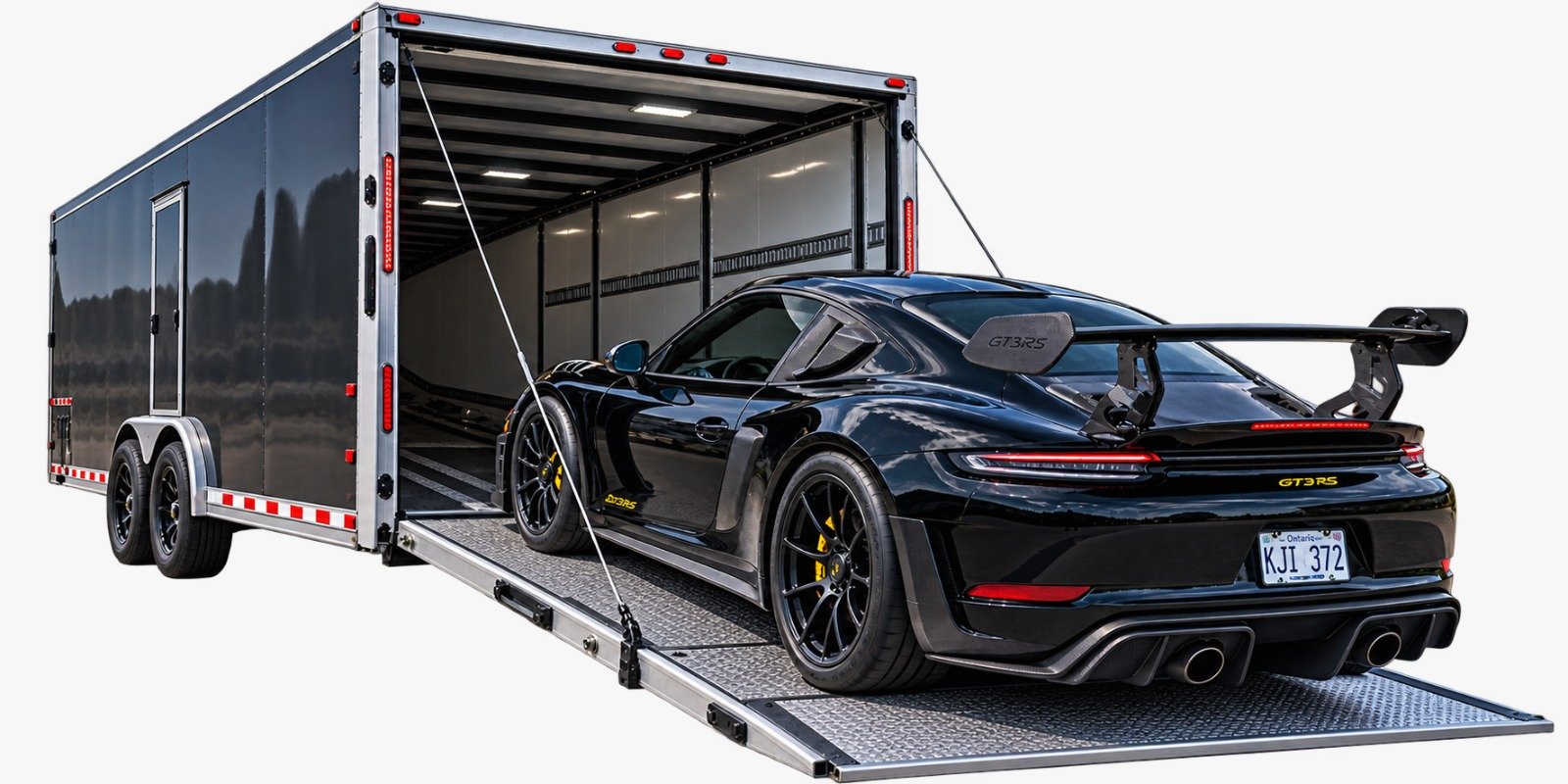
Why Enclosed Car Transport Is the Best Choice for Luxury Vehicles
When researching the best car transport for luxury vehicles, you will quickly see that industry specialists recommend enclosed car transport for high-end, exotic, and collector automobiles. While standard transport moves millions of everyday commuter cars safely every year, luxury models feature custom multi-stage paint, low front splitters, wide performance tires, and sensitive electronics that demand extra protection.
An enclosed car carrier creates a sealed, weather-tight environment around your vehicle from pickup to delivery. Your car never sits exposed to flying stones kicked up by highway traffic, freezing rain in Northern Ontario, or winter de-icing chemicals across the Prairies.
Complete Weather & Road Debris Protection
Hard-sided trailers block windblown gravel, insects, tree sap, hail, snow, and corrosive magnesium chloride road treatments, preserving ceramic coatings and paint protection film.
Enhanced Privacy & Lower Cargo Density
Enclosed carriers haul fewer vehicles per load—often between two and six cars—and keep rare or recognizable vehicles completely out of public view during overnight stops.
Choosing door-to-door enclosed vehicle shipping also minimizes unnecessary handling. Rather than transferring your vehicle between regional yards, a dedicated driver loads the car as close to your origin address as local commercial truck bylaws allow and delivers it directly to your destination driveway or dealership bay.
Open vs. Enclosed Transport for Luxury Vehicles: A Clear Comparison
Many owners ask: is enclosed car shipping worth it compared to an open carrier? Understanding the trade-offs in open vs enclosed transport for luxury vehicles helps you match the service level to your vehicle's value, ground clearance, and travel distance.
Standard open auto transport uses multi-level open-air trailers capable of carrying seven to ten vehicles at once. It is the most economical and widely available option for daily-driven luxury sedans, crossover SUVs, or leased vehicles that already see regular highway use. However, for low-slung coupes, supercars, concours classics, and brand-new showroom deliveries, enclosed transport eliminates exposure risks that open trailers cannot prevent.
| Feature | Enclosed Car Transport | Open Auto Transport |
|---|---|---|
| Weather & Debris Protection | Full hard-sided protection against rain, snow, road salt, UV rays, and stone chips. | Exposed to ambient weather, highway spray, and airborne road debris. |
| Loading Mechanism | Hydraulic liftgates or low-angle extended ramps suitable for low-clearance vehicles. | Angled drive-on ramps designed for standard factory ground clearance. |
| Securement Method | Over-the-tire soft tie-down straps and wheel chocks that avoid chassis contact. | Standard wheel straps or frame-hook chains depending on carrier configuration. |
| Privacy & Security | High privacy; vehicles remain hidden inside a locked trailer throughout transit. | Vehicles are visible to passing traffic and at highway rest stops. |
| Best Suited For | Exotic sports cars, classic cars, collector vehicles, custom builds, and high-value luxury models. | Everyday luxury SUVs, standard sedans, dealership fleet transfers, and seasonal relocations. |
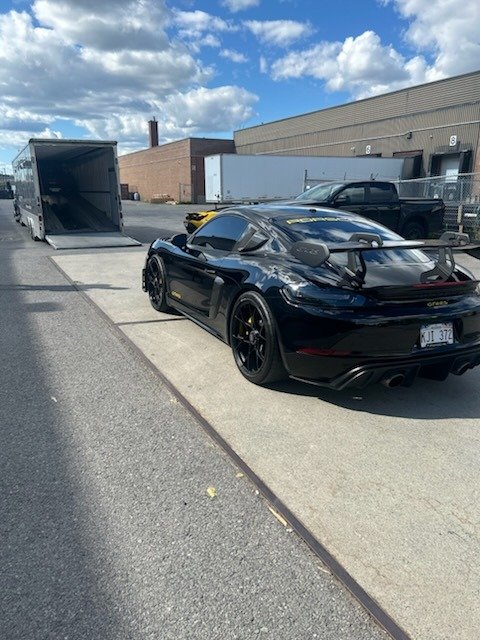
When to Consider Rail or Flatbed Specialty Vehicle Transport
While enclosed highway trailers are the top choice for most exotic car transport and luxury vehicle shipping requests, two other transport methods occasionally enter the conversation in Canada: railway auto racks and single-vehicle flatbeds.
Enclosed Railway Auto Racks
Canada's transcontinental rail network moves thousands of newly manufactured vehicles between major hubs every week. Fully enclosed multi-level railcars protect vehicles from weather and vandalism over long cross-country corridors, such as shipping between Ontario and Western Canada. However, rail vehicle transport operates strictly terminal-to-terminal and requires steep internal ramps that can challenge ultra-low sports cars. It works best for standard-clearance luxury SUVs and sedans when flexible terminal scheduling fits your timeline.
Single-Vehicle Flatbed & Rollback Carriers
For short regional moves—such as transporting a luxury car from a port of entry, auction house, or service centre within the same metro area—a hydraulic rollback flatbed offers rapid scheduling and easy loading. Because flatbeds remain open to the elements, they are generally reserved for short-distance deliveries or non-running specialty vehicles rather than multi-province journeys.
Check Ground Clearance Before Booking: If your vehicle has less than 12 centimetres (5 inches) of front splitter clearance—or features carbon-ceramic brakes and wide track tires—always request a carrier equipped with a hydraulic liftgate. Standard sloped ramps can scrape low front bumpers during loading.
Essential Equipment That Defines Premium Car Shipping
Not every enclosed trailer offers the same level of engineering. When evaluating high-end vehicle transport providers, look closely at the hardware used to load, support, and secure your car. Professional carriers invest in specialized equipment designed specifically around delicate suspensions and custom bodywork.
- Hydraulic Liftgates: Instead of driving up a steep incline, your car rolls onto a horizontal platform that rises smoothly to the trailer deck level. This keeps the vehicle completely flat, eliminating any risk of bottoming out or scraping low aerodynamic splitters.
- Soft Tie-Down Straps (Over-the-Tire Harnesses): Metal hooks attached to suspension control arms or subframe slots can bend alignment components or scratch powder-coated parts. Premium carriers use nylon wheel nets or soft straps looped over the tires, allowing the car's own suspension to absorb minor road vibrations naturally.
- Air-Ride Suspension Systems: Commercial trailers equipped with air-ride suspension dramatically reduce vertical bounce and harsh road shock compared to traditional leaf-spring axles, protecting sensitive electronic sensors and alignment geometry over long highways.
- Drip Pans & Solid Deck Flooring: Multi-tier enclosed trailers use solid aluminum or steel decks rather than open grating, ensuring fluid drips or road dust from an upper vehicle can never reach a car parked on the lower level.
- Clean Interior Winches: If a collector car or museum piece cannot be started or has ultra-tight clearance inside the trailer, a soft-strap winch guides the vehicle gently into place without revving the clutch in a confined space.
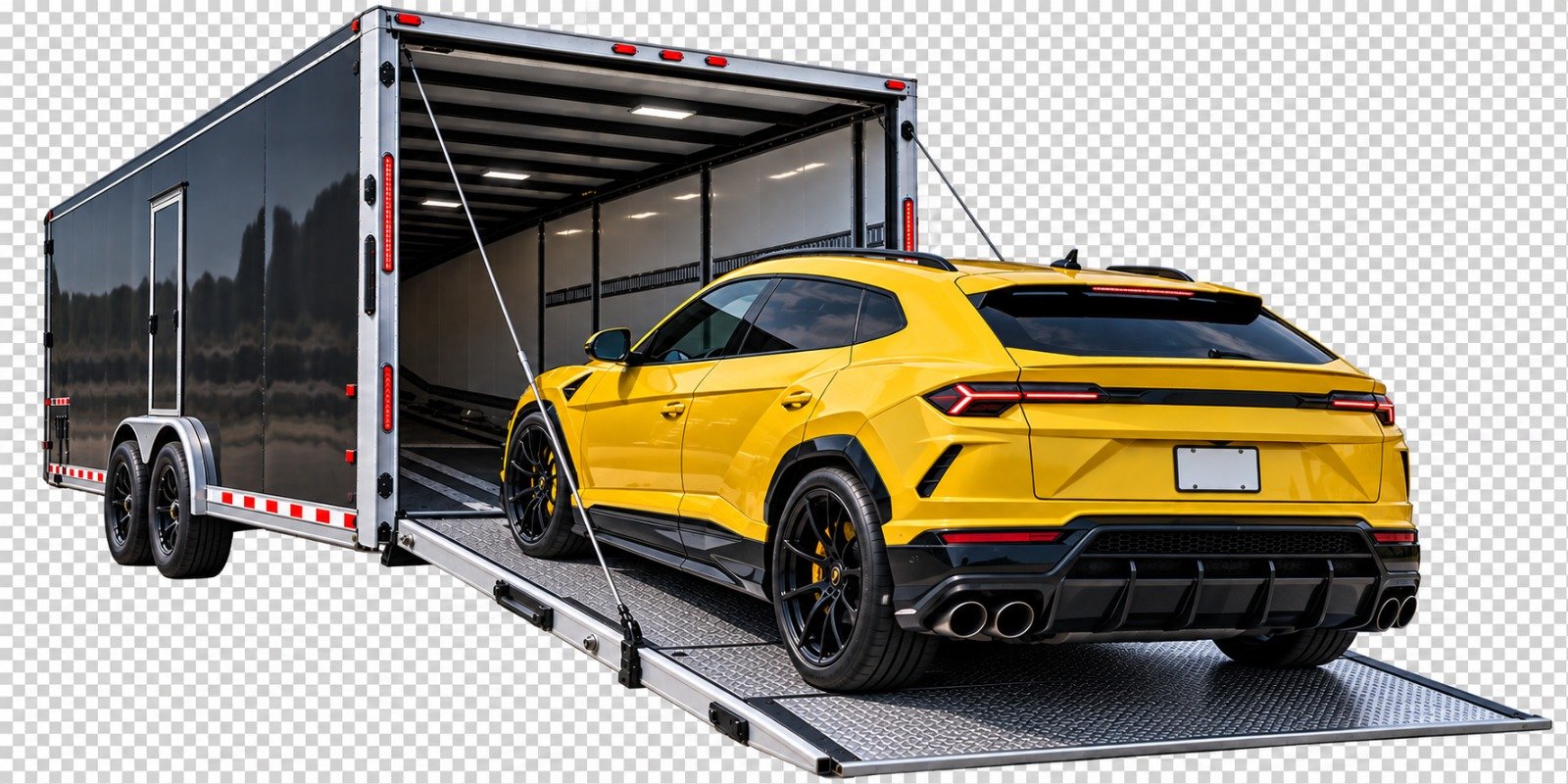
Shipping a Luxury Car Across Canada: Seasonal & Regional Factors
Understanding how to ship a luxury car across Canada requires accounting for geography, extreme seasonal shifts, and federal commercial transport regulations. Stretching more than 5,500 kilometres from St. John's to Victoria, the Trans-Canada highway network crosses coastal mountain passes, vast Prairie corridors, and the Canadian Shield.
Commercial auto carriers operating across provincial borders adhere to strict safety and hours-of-service rules overseen by Transport Canada and provincial transportation ministries. During winter months—often extending from October through April—mountain routes such as the Coquihalla Highway in British Columbia and the Trans-Canada around Lake Superior experience sudden snowstorms, gravel sanding, and heavy de-icing treatments. You can monitor real-time seasonal road conditions through resources like DriveBC or Ontario 511, which makes it immediately clear why sealed enclosed trailers are essential for high-value cars travelling in autumn, winter, or early spring.
Whether you are coordinating a cross-country relocation on our Vancouver to Toronto car shipping corridor or moving a seasonal sports car along our Toronto to Calgary car shipping route, Optixtrace works with vetted carriers experienced in Canadian interprovincial logistics.
If you are importing a luxury or collector vehicle into Canada from the United States or overseas before domestic delivery, be sure all customs clearance and Registrar of Imported Vehicles (RIV) documentation is completed prior to carrier dispatch so border release delays do not disrupt your schedule.
How to Protect a Luxury Car During Shipping: 6 Preparation Steps
Even when you book top-tier luxury vehicle transportation services in Canada, proper preparation ensures a smooth pickup, accurate condition reporting, and complete clarity around cargo coverage. Follow these six practical steps before your carrier arrives:
-
1
Wash the Exterior Thoroughly
A clean vehicle makes it easy for both you and the driver to spot tiny stone chips, swirl marks, or pre-existing blemishes during the initial vehicle condition inspection.
-
2
Document Condition with High-Resolution Photos
Take timestamped photos and a slow walk-around video in bright daylight—covering every body panel, wheel rim, front splitter, glass surface, and the odometer reading—before loading begins.
-
3
Remove Loose Items & Custom Accessories
Take out personal belongings, toll transponders, radar detectors, loose floor mats, and detachable front tow hooks or aero add-ons that could shift during transit.
-
4
Verify Fluid Levels, Tire Pressure & Battery Charge
Ensure the battery holds a strong charge, tires are inflated to factory specifications, and there are no active fluid leaks. Keep the fuel tank around one-quarter full to minimize unnecessary weight.
-
5
Disable Aftermarket Alarms & Explain Start Procedures
Deactivate tilt-sensor alarms that could trigger from road vibration and drain the battery. Share any unique key-fob, immobilizer, or air-suspension transport-mode instructions with the driver.
-
6
Confirm Cargo Insurance Limits in Writing
Review the carrier's cargo insurance certificate and verify that the coverage limit matches your vehicle's appraised or replacement value. You can also consult the Insurance Bureau of Canada (IBC) or your personal specialty auto insurer regarding supplemental transit endorsements.

Frequently Asked Questions About Luxury Car Transport
Below are clear answers to the most common questions Canadian vehicle owners, dealerships, and collectors ask when arranging specialty vehicle transport.
The safest way to transport an exotic or luxury vehicle is via hard-sided enclosed car transport equipped with a hydraulic liftgate, air-ride suspension, and over-the-tire soft tie-down straps. This setup prevents scraping on steep ramps, isolates the vehicle from road vibration, and shields exterior finishes from gravel, salt, and harsh weather.
Enclosed trailers carry fewer vehicles per trip—typically two to six cars compared to up to ten on an open hauler—and require specialized liftgate hardware, higher cargo insurance limits, and experienced drivers trained in handling high-value automobiles. Those factors increase per-vehicle operating costs while delivering significantly higher protection.
Yes. Enclosed carriers built for exotic and performance vehicles use horizontal hydraulic liftgates or low-angle race ramps that keep the car virtually level during loading and unloading. Always share your vehicle's make, model, and any aftermarket splitter or lowering modifications when requesting a quote so the right trailer is assigned.
Reputable commercial auto carriers maintain active cargo liability insurance covering vehicles while in their care, custody, and control. Before dispatch, confirm the exact coverage limit per vehicle, check whether deductibles apply, and retain your signed pickup and delivery inspection reports (Bill of Lading).
Because enclosed carriers operate in smaller numbers than open haulers, booking two to three weeks ahead of your target pickup window gives you the best scheduling flexibility—especially during peak spring and autumn snowbird seasons or major collector auction weekends.
Choosing the Right Transport Solution for Your Luxury Vehicle
When evaluating luxury car transport options across Canada, hard-sided enclosed auto transport stands apart as the premier choice for protecting high-value automobiles. By pairing weather-sealed trailers with hydraulic liftgates, air-ride suspension, and non-invasive soft tie-down straps, enclosed carriers safeguard delicate paintwork, low-clearance aerodynamics, and mechanical integrity from coast to coast.
Whether you are relocating to a new province, acquiring an exotic car from an out-of-province showroom, or coordinating dealership inventory transfers, Optixtrace Car Shipping helps match your vehicle with vetted, professional transport solutions tailored to your route and schedule.
Looking to Ship Your Vehicle Across Canada?
Tell us about your vehicle, pickup location, and destination. Our Canadian automotive logistics specialists will prepare a tailored, transparent transport quote for your luxury or specialty car.
Get a Free Car Shipping Quote