
Moving one vehicle across a country as vast as Canada requires careful planning, but coordinating multiple vehicle transport introduces an entirely different layer of carrier routing, weight distribution, and scheduling. Whether you are a household relocating from British Columbia to Ontario with two family cars, a collector moving several classic vehicles, or a commercial dealership replenishing lot inventory, shipping multiple vehicles at once is often far more efficient than driving them individually.
Understanding how multi-car haulers operate, how transport capacity is allocated across Canadian highway and rail corridors, and what influences overall shipping costs allows individuals and businesses to plan cross-country moves without costly delays. At Optixtrace Car Shipping, we coordinate dependable vehicle transportation solutions across every province, helping clients match their multi-vehicle shipments with the right equipment and transit methods.

Who Needs Multi-Car Transport in Canada?
When people picture a multi-car hauler on the Trans-Canada Highway, they often assume every vehicle on the trailer belongs to an automaker or a large franchise dealership. In reality, multi-vehicle shipping services serve a wide range of private and commercial shippers across Canada.
Interprovincial Relocations
Families moving between provinces frequently own two or three daily drivers. Coordinating multiple car shipping on a single booking avoids putting thousands of kilometres on personal vehicles and eliminates multi-day hotel and fuel expenses.
Dealership Vehicle Transportation
Franchise and independent dealerships regularly execute dealership inventory transfers, auction acquisitions, and seasonal stock balancing between regional branches using scheduled car carrier transportation.
Vehicle Fleet Transportation
Construction firms, utility contractors, rental agencies, and corporate offices rely on structured fleet relocation when launching regional projects, rotating leased units, or retiring commercial vans and pickup trucks.
Seasonal & Estate Moves
Car collectors relocating winter residences, attending out-of-province exhibitions, or settling family estates often need several specialty or vintage automobiles moved simultaneously under unified scheduling.
Whether you are shipping two sedans on a popular corridor such as Toronto to Calgary car shipping or coordinating a ten-unit corporate transfer across Western Canada, consolidating vehicles into a single logistics plan streamlines communication, paperwork, and delivery timing.
Car Carrier Transportation Equipment and Capacity
One of the most common questions customers ask is: how many cars can a transport truck carry? The exact transport capacity depends on the trailer configuration, provincial axle-weight regulations, and the physical dimensions of the vehicles being loaded.

Standard Multi-Car Hauler Configurations
Across Canada, commercial carriers operate several specialized trailer setups to handle different shipment sizes and vehicle profiles:
- Two- to Three-Car Wedge and Hotshot Trailers: Pulled by heavy-duty dually pickup trucks, these nimble setups excel at regional hauls, tight residential pickups, and expedited two-vehicle household moves where an 80-foot tractor-trailer cannot safely turn around.
- Five- to Seven-Car Stinger and High-Mount Trailers: Commonly used for mixed freight corridors, these open auto transport trailers balance manoeuvrability with strong payload capacity, easily accommodating heavier SUVs and half-ton pickup trucks.
- Eight- to Ten-Car Multi-Level Haulers: The backbone of long-distance bulk vehicle shipping. Using hydraulically adjustable upper and lower decks, experienced drivers can angle compact and mid-size sedans to maximize vertical clearance while remaining compliant with provincial bridge and height limits.
- Multi-Car Enclosed Transporters: Hard-sided trailers equipped with hydraulic liftgates and internal decking systems can carry anywhere from two to six vehicles completely shielded from road salt, gravel, and harsh Canadian winter weather.
| Trailer Type | Typical Vehicle Capacity | Best Suited For | Weather Exposure |
|---|---|---|---|
| 2–3 Car Wedge / Flatbed | 2 to 3 vehicles | Short regional moves, tight residential streets, commercial vans | Open to elements |
| 5–7 Car Open Carrier | 5 to 7 vehicles (mixed sizes) | SUVs, pickup trucks, small fleet relocation, interprovincial routes | Open to elements |
| 8–10 Car Multi-Level Hauler | 8 to 10 compact/mid-size cars | Dealership inventory transfers, cross-country bulk vehicle shipping | Open to elements |
| Enclosed Multi-Car Trailer | 2 to 6 vehicles | Luxury, classic, exotic, and newly purchased collector vehicles | Fully enclosed protection |
Because Canadian provinces enforce strict gross vehicle weight ratings and height restrictions—monitored through national frameworks overseen by Transport Canada and provincial commercial vehicle enforcement—a trailer rated for nine compact sedans may only legally carry six full-size SUVs or heavy-duty pickup trucks.
How Does Multi-Car Shipping Work Step by Step?
Coordinating multi-vehicle logistics relies on systematic vehicle consolidation and precise carrier scheduling and routing. Even when a single customer is shipping two or three cars rather than a full nine-car load, carriers combine compatible shipments heading along the same highway corridor so every truck operates near optimal capacity.
- Vehicle Inventory and Route Assessment: Logistics coordinators record the exact year, make, model, and operational status of every vehicle. Knowing whether a shipment includes low-clearance sports cars, lifted trucks, or non-running units determines which trailer deck positions and winch equipment are required.
- Service Tier and Equipment Matching: Based on vehicle value and budget, shipments are assigned to open auto transport services for standard daily drivers or enclosed vehicle transport for high-value, classic, or custom automobiles.
- Carrier Scheduling and Consolidation: Dispatchers align pickup windows along major arteries such as Highway 401, the Yellowhead Highway, or the Trans-Canada Highway. If a household is moving three vehicles from the same address, all three are typically assigned to the same truck so they travel together.
- Multi-Point Inspection and Loading: Before a single wheel touches the ramp, the driver conducts a detailed walk-around inspection for each vehicle, documenting existing scratches, dents, or glass chips on a Bill of Lading. Vehicles are then loaded in a calculated sequence to maintain an even centre of gravity across the trailer axles.
- Securement and Highway Transit: Each vehicle is secured using four-point soft-strap wheel tie-downs rather than metal frame hooks, allowing the vehicle's own suspension to absorb road vibrations naturally during cross-country transit.
- Unloading and Final Sign-Off: Upon arrival, vehicles are unloaded in reverse order, re-inspected against the origin Bill of Lading, and released to the designated recipient.
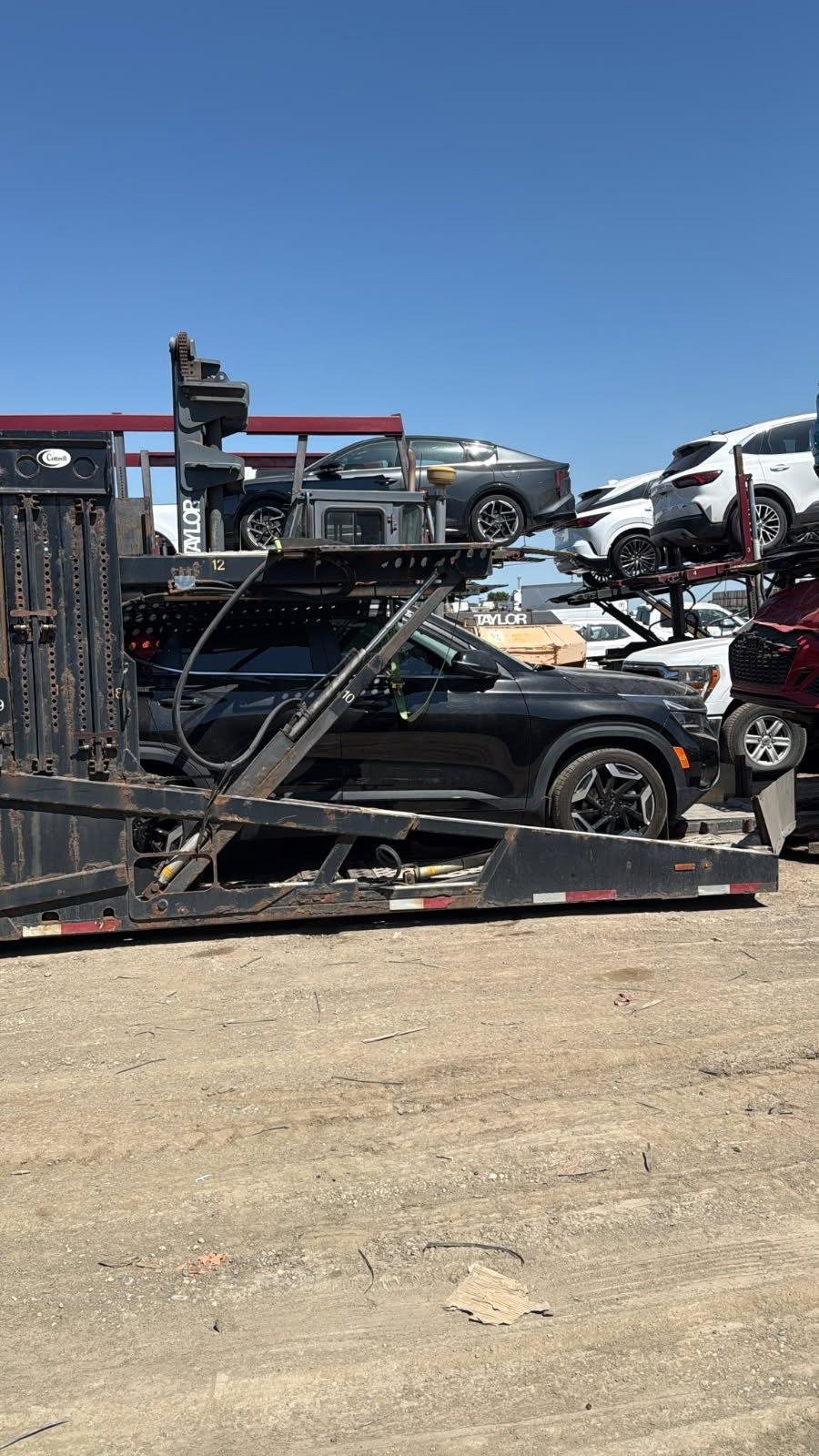
Keep all vehicles at a single pickup address whenever possible. When a carrier can load two, three, or more vehicles in one stop rather than navigating multiple residential neighbourhoods, dispatchers save hours of loading time—a logistical efficiency that often translates into priority scheduling and more competitive per-vehicle rates.
Choosing the Best Way to Transport Multiple Vehicles Long Distance
Canada's geography presents unique challenges for car transport across Canada. Moving vehicles between regional hubs—such as Vancouver to Calgary car shipping through the Rocky Mountains—requires different planning than shipping ten vehicles over 4,400 kilometres from British Columbia to Ontario or Atlantic Canada.
Door-to-Door Highway Carrier Transport
For shipments of two to ten vehicles moving within a province or across neighbouring provinces, direct highway transport on a multi-car hauler is usually the fastest, most straightforward choice. With door-to-door open transport, the carrier picks up as close to your home, dealership, or commercial yard as municipal bylaws and street width allow, and delivers directly to your destination address without intermediate terminal transfers.
Cross-Country Rail and Intermodal Transport
When moving multiple standard passenger vehicles across vast transcontinental distances—such as between Western Canada and the Greater Toronto Area or Montreal—Canadian rail car transport offers a highly reliable alternative. Vehicles are consolidated at regional rail compounds, loaded into enclosed multi-level auto-rack railcars, and transported across the national rail network before local car carriers complete final delivery.

Commercial Vans, Heavy Pickups, and Oversized Units
Businesses relocating service fleets often need to move high-roof cargo vans, dually trucks, or utility vehicles that exceed the height limits of standard multi-level car haulers. In these scenarios, combining step-deck trailers or commercial flatbed carriers alongside standard multi-car haulers ensures every unit in the fleet arrives on schedule without risking overhead clearance issues.
What Determines the Cost of Shipping Multiple Vehicles in Canada?
Understanding the cost of shipping multiple vehicles in Canada starts with recognizing how carriers price deck space. Rather than charging a flat fee per truck unless you book an entire dedicated trailer, logistics providers calculate pricing based on how much length, height, and weight your vehicles occupy on a given route.
- Number of Vehicles and Consolidation Efficiency: Shipping two or more vehicles together between the same origin and destination typically lowers the per-vehicle cost compared to booking separate single-car orders, as the carrier avoids extra pickup and drop-off stops.
- Vehicle Size, Weight, and Modifications: Compact hatchbacks require less deck length and fuel than full-size pickup trucks or three-row SUVs. Aftermarket roof racks, lift kits, or oversized tires can occupy additional vertical space and affect pricing.
- Distance and Corridor Demand: Major freight corridors connecting hubs like Vancouver, Calgary, Edmonton, Winnipeg, Toronto, and Montreal see frequent carrier traffic. Remote northern communities or coastal ferry crossings require specialized routing.
- Seasonal Weather Conditions: Winter storms across the Prairies, Northern Ontario, and mountain passes in British Columbia can extend transit schedules and increase fuel consumption. Monitoring provincial road advisories via platforms like DriveBC and Ontario 511 helps shippers anticipate seasonal transit windows.
- Open vs. Enclosed Equipment: Enclosed carriers carry fewer vehicles per load and require specialized equipment, placing them at a higher price tier than open multi-car trailers.
How to Prepare Multiple Vehicles for Carrier Pickup
When a multi-car carrier arrives to load two, four, or eight vehicles, preparation directly affects how smoothly the loading process unfolds. Following a standardized checklist across every vehicle prevents delays and protects your shipment:

- Wash Each Vehicle's Exterior: Clean paintwork makes it easy for both you and the driver to spot and document any pre-existing stone chips or scuffs during the origin inspection.
- Document Condition with Timestamped Photos: Take clear photos of all four sides, the roof, wheels, and odometer reading of every vehicle before loading.
- Maintain Roughly a Quarter Tank of Fuel: Keeping fuel levels around one-quarter tank provides enough fuel for loading and unloading while eliminating unnecessary weight across multiple vehicles.
- Remove Personal Belongings and Loose Accessories: Remove toll transponders, dash cameras, bike racks, and loose interior cargo. Commercial auto transport regulations and cargo policies generally exclude household goods packed inside vehicles.
- Label Keys Clearly: Provide a complete set of working keys or key fobs for every vehicle, tagged clearly with the vehicle's make, model, and last four digits of the VIN.
- Verify Battery Charge and Tire Pressure: Ensure every operable vehicle starts reliably and has properly inflated tires so drivers can load and position them safely on inclined ramps.
If you are importing or registering vehicles across provincial borders after delivery, review provincial inspection and licensing guidelines through the Canadian Council of Motor Transport Administrators (CCMTA) or your destination province's transportation ministry so your paperwork is ready upon arrival.
Frequently Asked Questions About Multi-Vehicle Transport
Yes. Multi-level car carriers routinely transport anywhere from two to ten vehicles on a single truck across Canada, depending on trailer design and vehicle dimensions. Whether you are shipping two family vehicles or a commercial batch of eight sedans, your vehicles can be scheduled onto the same carrier so they travel together along the same route.
Standard open multi-level car haulers typically carry between seven and ten compact or mid-size passenger cars. When transporting larger SUVs, commercial vans, or full-size pickup trucks, capacity generally ranges from five to seven vehicles due to axle weight limits and vertical clearance regulations. Smaller regional wedge trailers carry two to three vehicles.
In most cases, yes. When multiple vehicles share the same pickup location, destination, and dispatch schedule, carriers save significant fuel and loading time compared to coordinating separate individual pickups. Those operational efficiencies typically result in a lower per-vehicle shipping rate than booking standalone transports.
Yes. Modern multi-level car carriers use adjustable hydraulic decks that allow drivers to transport a mix of sedans, hatchbacks, crossovers, SUVs, and light-duty pickup trucks on the same load. However, low-clearance sports cars or oversized commercial vans may require specialized deck positioning or enclosed and flatbed equipment.
Dealerships work with automotive logistics coordinators to schedule recurring open multi-car haulers for regional inventory transfers and auction pickups, or intermodal rail and carrier networks for long-haul cross-country stock movements. Consolidated Bills of Lading and commercial yard loading allow dealerships to move multiple units efficiently without adding mileage to new or pre-owned inventory.
Summary: Streamlining Multi-Vehicle Transport in Canada
Coordinating multiple vehicle transport across Canada comes down to matching your vehicle types, timeline, and budget with the right carrier equipment and route strategy. By consolidating two or more vehicles onto a single multi-level open hauler, enclosed transporter, or cross-country rail corridor, families, dealerships, and commercial fleet managers avoid unnecessary mileage, reduce per-vehicle logistics expenses, and keep every vehicle on a unified schedule.
Whether you are planning an interprovincial household relocation or managing ongoing commercial inventory transfers, working with an experienced Canadian vehicle transportation provider ensures clear inspection documentation, compliant carrier routing, and dependable delivery from coast to coast. You can explore more service options across our nationwide Canada car shipping network.
Looking to Ship Your Vehicle Across Canada?
Whether you are moving two family cars between provinces or coordinating a commercial multi-vehicle shipment, Optixtrace Car Shipping will match your vehicles with reliable open, enclosed, or rail transport across Canada.
Get a Free Car Shipping Quote