
Moving a vehicle along the Highway 401 and Autoroute 20 corridor between Ontario and Quebec is one of the busiest automotive transport routes in the country. Whether you are relocating for work, purchasing a car from an out-of-province dealership, sending a seasonal vehicle home, or managing fleet inventory, arranging professional Toronto to Montreal car shipping saves you roughly 540 kilometres of highway driving, fuel expenses, and unnecessary odometer wear.
Choosing the right shipping method depends on your vehicle type, schedule flexibility, pickup location, and budget. At Optixtrace Car Shipping, we coordinate dependable Toronto to Montreal car shipping solutions tailored to individual owners, relocating families, and automotive businesses across Canada. Below, we break down every transport mode, delivery model, cost factor, and preparation step so you can book with complete confidence.

Direct highway freight route linking the Greater Toronto Area (GTA) with Greater Montreal and surrounding municipalities.
Flexible trailer configurations suited for daily commuters, SUVs, pickup trucks, EVs, classic cars, and commercial vans.
Choose residential/business street access or structured regional depot drop-off and pickup for streamlined scheduling.
What Are the Car Shipping Options from Toronto to Montreal?
When researching what are the car shipping options from Toronto to Montreal, you will encounter several distinct methods designed for different vehicle profiles, budgets, and timelines. Because Toronto and Montreal sit within the same regional freight corridor, highway carrier transport is the primary and most practical way to move vehicles between the two cities.
- Open Car Carrier Transport: The industry standard for everyday sedans, hatchbacks, minivans, crossovers, and pickup trucks. Vehicles are secured onto an open-air, single- or multi-level trailer alongside other passenger vehicles travelling the same corridor.
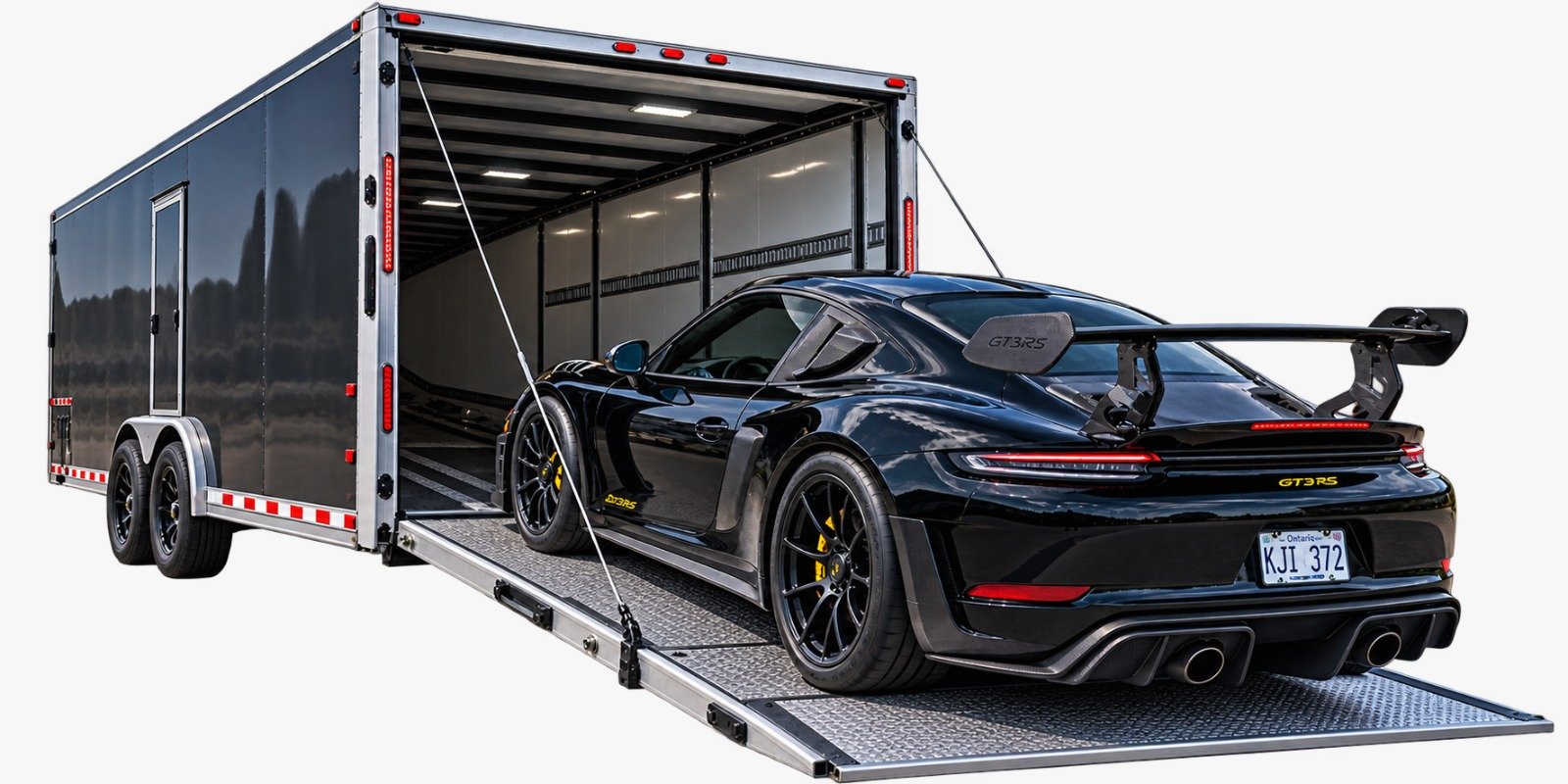
- Enclosed Vehicle Transportation: Designed for luxury automobiles, vintage classics, exotic sports cars, and newly restored builds. Your vehicle rides inside a fully covered hard-sided or soft-sided trailer shielded from road spray, gravel, and winter weather.
- Flatbed and Specialized Carrier Transport: Ideal for oversized commercial vans, lifted trucks, modified off-road vehicles, or non-running units requiring winch-assisted loading onto a single-level deck.
- Railway Vehicle Transportation: While railway vehicle transportation is widely used for long-haul cross-country shipping from Ontario or Quebec to Western Canada, short-to-medium regional corridors like Toronto to Montreal rely almost exclusively on road transport carriers for faster dispatch and direct handover.
For most drivers, choosing the best way to transport a car from Toronto to Montreal comes down to balancing weather protection against budget and delivery convenience. Exploring all vehicle transportation services available on this route helps match your vehicle's exact dimensions and condition to the appropriate carrier equipment.

Open vs. Enclosed Car Transport: Toronto to Montreal
Comparing open vs enclosed car transport Toronto to Montreal is the most important decision you will make when booking a carrier. Both methods follow strict securement and commercial safety standards regulated by Transport Canada, yet they serve noticeably different customer priorities.
Open Car Carrier Transport
- Higher Dispatch Frequency: Open trailers make up the majority of commercial auto haulers running between Ontario and Quebec, resulting in frequent departure windows.
- Lower Car Shipping Rates: Sharing trailer space across multiple vehicles keeps per-vehicle pricing competitive for personal relocations and dealership transfers.
- Full Visibility During Transit: Drivers can visually inspect tie-downs and vehicle positioning at every mandatory safety stop along the route.
- Best Suited For: Daily drivers, leased vehicles, family SUVs, standard pickup trucks, and fleet units.
Enclosed Vehicle Transportation
- Complete Weather Shielding: Protects paintwork and undercarriages from freezing rain, road salt, slush, and airborne highway debris—especially valuable between November and April.
- Low-Angle Liftgates & Ramps: Hydraulic liftgates and extended ramps safely load low-clearance sports cars without scraping front splitters.
- Discreet, Controlled Handling: Fewer vehicles per load mean minimal stops and heightened attention for collector or auction purchases.
- Best Suited For: Luxury sedans, exotic coupes, collector classics, custom show builds, and high-value EVs.
If you are shipping a standard commuter car during fair weather, open car carrier transport delivers reliable, economical service. Conversely, if you are transporting a rare collector vehicle or shipping a brand-new luxury purchase through harsh winter road conditions, booking enclosed vehicle transportation provides essential peace of mind.
Check Winter Corridor Conditions Before Scheduling: Highway 401 through eastern Ontario (Kingston to Cornwall) and Autoroute 20 entering Montérégie frequently experience lake-effect snow squalls and heavy road salting from late autumn through early spring. You can monitor real-time highway conditions via Ontario 511 and Québec 511 when planning your pickup window.
Door-to-Door vs. Terminal-to-Terminal Car Shipping
Once you select an open or enclosed trailer, the next choice involves how and where the carrier collects and releases your vehicle. Evaluating door-to-door vs terminal-to-terminal car shipping Toronto to Montreal ensures your logistics plan aligns with local street access in both metropolitan areas.
| Feature | Door-to-Door Car Shipping | Terminal-to-Terminal Shipping |
|---|---|---|
| Pickup & Delivery Location | As close as safely and legally possible to your home, office, or dealership address. | Designated regional auto transport terminals or secure holding yards near Toronto and Montreal. |
| Customer Convenience | Maximum convenience—eliminates extra trips to industrial depots or arranging rides home. | Requires driving to the origin terminal and picking up your vehicle at the destination terminal. |
| Urban Street Access | In dense downtown cores (e.g., Old Montreal, Plateau-Mont-Royal, or downtown Toronto), drivers meet at a nearby wide plaza or wide avenue. | Terminals are located in commercial zones engineered for full-size 75-foot tractor-trailers. |
| Schedule Flexibility | Requires someone 18 or older present during the agreed pickup and delivery appointment windows. | Offers flexible drop-off and collection hours during terminal operating days. |
| Cost Efficiency | Streamlined direct routing without third-party terminal storage handling fees. | Can be practical when coordinating multi-car dealership batches or flexible arrival dates. |
Many residential neighbourhoods in Toronto (such as High Park, The Beaches, or Yorkville) and Montreal (such as Outremont, Westmount, or Verdun) feature narrow streets, low-hanging tree branches, parked cars, or municipal truck restrictions. With door-to-door car shipping, your assigned driver coordinates a safe, accessible meeting spot—often right outside your driveway or at a spacious shopping plaza parking lot a few blocks away—so loading happens smoothly without risking property or vehicle damage.
Pricing Factors and Transit Timelines on the Toronto–Montreal Route
Two of the most frequent questions customers ask are how much does it cost to ship a car from Toronto to Montreal and how long does car shipping from Toronto to Montreal take. Because auto transport carriers calculate rates dynamically based on equipment, fuel, and load balancing, transparent quotes depend on several concrete variables rather than a flat one-size-fits-all number.
What Determines Toronto to Montreal Car Shipping Rates?
- Vehicle Size, Weight, and Ground Clearance: Compact sedans occupy less deck space and weigh significantly less than full-size three-row SUVs, heavy-duty pickup trucks, or cargo vans. Larger dimensions reduce the number of vehicles a carrier can load, adjusting the per-vehicle rate accordingly.
- Carrier Type (Open vs. Enclosed): Enclosed trailers carry fewer vehicles per trip and use specialized liftgate equipment, resulting in higher rates than standard open multi-car haulers.
- Operational Condition: Running, steerable vehicles drive directly onto carrier ramps. Non-running vehicles require specialized winch equipment and extra loading time.
- Pickup and Delivery Geography: Direct core-to-core transfers between Mississauga, Markham, Vaughan, or Scarborough and Laval, Longueuil, Dorval, or Brossard sit directly on main freight arteries, whereas outlying rural townships may involve a modest distance adjustment.
- Seasonal Demand Cycles: Spring snowbird returns, late-summer university moves, and peak autumn dealership inventory transfers increase corridor demand. Booking in advance helps secure affordable vehicle transportation from Toronto to Montreal.
How Long Does Vehicle Transport from Toronto to Montreal Take?
While a non-stop passenger car drive between Toronto and Montreal takes roughly five-and-a-half to six hours, commercial auto transport operates under strict federal Hours of Service regulations governing commercial driver rest periods, multi-vehicle loading sequences, and weigh-station inspections. Once your vehicle is picked up, transit along the corridor typically moves swiftly, though total door-to-door turnaround includes a scheduled pickup window for carrier route consolidation.
To receive an accurate, itemized rate tailored to your exact vehicle make, model, and preferred dates, request a customized estimate through our online vehicle shipping quote form.

How to Ship a Car from Toronto to Montreal: Step-by-Step
Understanding how to ship a car from Toronto to Montreal from start to finish removes uncertainty and prevents last-minute delays on pickup day. Follow this structured workflow to prepare your vehicle for carrier handover:
Request a Detailed Transport Quote
Provide your vehicle's year, make, model, operational status, origin postal code in the GTA, destination postal code in Greater Montreal, and your target pickup timeframe.
Confirm Transport Scheduling and Carrier Assignment
Once you approve your quote, our dispatch team coordinates with vetted commercial auto transport carriers servicing the Ontario–Quebec lane and confirms your pickup window.
Clean the Exterior and Remove Personal Belongings
Wash your vehicle before pickup so existing scratches, dents, or stone chips are clearly visible during inspection. Remove loose personal items, toll transponders (such as 407 ETR devices), dash cams, and roof racks.
Check Fluid Levels, Tire Pressure, and Fuel
Leave the fuel tank at approximately one-quarter full—enough for loading and unloading without adding unnecessary curb weight. Verify the battery is charged and tires are properly inflated.
Complete the Origin Vehicle Inspection Report
At pickup, you and the driver walk around the vehicle together to document its exterior condition on the Bill of Lading (BOL) before signing and handing over a set of keys.
Destination Delivery Inspection and Key Handover
Upon arrival in Montreal, inspect the vehicle alongside the driver against the origin condition report, note any observations on the BOL, and sign off to complete delivery.

Ontario to Quebec Car Shipping: Provincial Registration & Insurance Tips
Because Ontario to Quebec car shipping crosses a provincial boundary, vehicle owners relocating permanently or purchasing a car out of province should plan ahead for licensing, safety inspections, and insurance documentation:
- Carrier Cargo Insurance vs. Personal Auto Policy: Reputable commercial auto carriers maintain cargo liability coverage for vehicles in their care, custody, and control during transit. Even so, the Insurance Bureau of Canada (IBC) recommends contacting your personal auto insurer prior to shipping to confirm how your policy covers interprovincial transport and changing your garaging address if you are relocating.
- Quebec Mechanical Inspection (SAAQ): If you are moving permanently from Ontario to Quebec or registering an Ontario-plated vehicle in Quebec, the Société de l'assurance automobile du Québec (SAAQ) generally requires a mechanical inspection at an authorized inspection centre before issuing Quebec plates.
- Seasonal Winter Tire Requirements: Under Quebec's Highway Safety Code, passenger vehicles registered in Quebec must be equipped with winter tires bearing the Three-Peak Mountain Snowflake symbol from December 1 through March 15. If you are shipping a vehicle to register in Quebec during winter, plan for compliant tires upon arrival.
- Nationwide Canadian Coverage: Need to coordinate multi-leg moves beyond Quebec—such as shipping from Western Canada into Ontario or onward to Atlantic Canada? Explore our dedicated Canadian vehicle shipping network for seamless cross-country logistics.
Frequently Asked Questions About Toronto to Montreal Car Shipping
Commercial auto carriers are licensed to transport motor vehicles rather than household goods, and carrier cargo insurance does not cover personal belongings left inside the cabin or trunk. Loose items can also shift during transit and damage interior trim or windows. Always empty the interior and trunk before pickup, leaving only standard factory accessories such as the spare tire, jack, and owner's manual.
Either you or an authorized representative aged 18 or older—such as a family member, friend, or dealership staff member—must be present at both pickup and delivery. This person will verify the vehicle's condition alongside the driver, sign the Bill of Lading inspection report, and hand over or receive the keys.
Yes. Electric vehicles such as Teslas, Hyundai IONIQ models, and Ford Mustang Mach-Es are routinely transported between Ontario and Quebec on both open and enclosed carriers. Because EVs weigh more than comparable gas-powered cars due to battery packs, sharing the exact make and model when requesting a quote ensures the carrier allocates proper axle weight distribution and appropriate tie-down points. Keep the battery charged between 30% and 60% prior to pickup.
Multi-vehicle transport trucks can measure up to 23 metres (75 feet) in length and require wide turning clearances and unobstructed overhead clearance. If residential parking, tight corners, or municipal bylaws prevent direct curb access, your driver will arrange a nearby wide commercial avenue or large retail parking lot just minutes from your address for a safe, legal loading or unloading handover.
Booking one to two weeks ahead of your preferred pickup window gives dispatchers maximum flexibility to match your schedule with reliable carriers running the Highway 401 and Autoroute 20 corridor. During peak moving months (May through September) or when requesting specialized enclosed transport, reserving two to three weeks in advance is ideal.
Making Your Ontario to Quebec Vehicle Move Seamless
Whether you are relocating between Canada's two largest metropolitan regions, transferring dealership inventory, or protecting a prized collector car from winter highway wear, professional Toronto to Montreal car shipping offers a practical, stress-free alternative to driving the corridor yourself. By weighing open versus enclosed carriers, deciding between door-to-door and terminal delivery, and preparing your vehicle with a clean exterior and documented inspection report, you set the stage for a smooth interprovincial handover.
At Optixtrace Car Shipping, we coordinate reliable vehicle logistics tailored to your schedule, vehicle specifications, and destination requirements across Ontario, Quebec, and all of Canada.
Looking to Ship Your Vehicle Across Canada?
Get a transparent, no-obligation rate tailored to your vehicle type, preferred transport method, and pickup schedule between Toronto, Montreal, and destinations nationwide.
Get a Free Car Shipping Quote