
Handing over the keys to your car, SUV, or commercial fleet unit for cross-country transport is a major milestone—especially if you have never shipped a vehicle before. Whether you are relocating between provinces, buying a car from an out-of-province dealership, or coordinating inventory transfers, understanding the car shipping pickup process removes uncertainty before the carrier even arrives.
From scheduling your pickup appointment and completing the pre-shipment condition inspection to signing the Bill of Lading (BOL) and watching your vehicle get secured onto the trailer, every step follows an established logistics protocol. This guide walks through exactly what happens when a car shipping driver picks up your vehicle in Canada so you can prepare smoothly and hand off your vehicle with complete confidence.

Before the Carrier Arrives: Scheduling and Car Shipping Preparation
A smooth vehicle pickup process starts well before a transport truck pulls onto your street or dealership lot. Because long-haul carriers operate across vast Canadian distances—from coastal highways in British Columbia to winter corridors in Ontario and the Maritimes—dispatchers coordinate pickup windows carefully around highway conditions, municipal bylaws, and route sequencing.
Confirming Your Pickup Appointment and Meeting Location
Once your booking is scheduled through Optixtrace Car Shipping, dispatch coordinates an estimated pickup window. Rather than a rigid down-to-the-minute slot, carriers typically provide a scheduled pickup day and follow up with an advance phone call—often a few hours to 24 hours ahead—to confirm arrival timing.
Commercial car haulers are large, heavy-duty combinations that require wide turning radii and clear overhead space. Under provincial commercial vehicle dimensions and local municipal traffic rules overseen alongside Transport Canada standards, transport trucks cannot safely navigate narrow residential cul-de-sacs, low-hanging tree canopies, or congested downtown streets. If your home address has tight access, your driver will coordinate a nearby wide-access meeting spot—such as a large retail plaza, commercial park, or wide boulevard—for safe loading.
Essential Car Shipping Preparation Checklist
Completing your car shipping preparation ahead of the appointment prevents delays and ensures accurate exterior documentation:
- Wash the vehicle exterior: Dirt, road salt, and winter grime can hide minor chips or hairline scratches. A clean exterior allows you and the driver to complete an accurate visual inspection.
- Remove personal belongings and loose items: Remove non-permanent items, aftermarket electronics, loose cargo, and toll transponders. Auto carriers are licensed to transport motor vehicles rather than household goods.
- Keep fuel around a quarter tank: Leaving roughly one-quarter tank of fuel provides plenty of range for loading, unloading, and terminal transfers while keeping overall vehicle weight down.
- Check battery charge, tire pressure, and fluids: Ensure the vehicle starts reliably, rolls smoothly, and has no active fluid leaks that could drip onto other vehicles on a multi-level trailer.
- Disable aftermarket alarms and fold mirrors: Turn off sensitive anti-theft alarms that may trigger from trailer vibration, fold side mirrors inward, and retract or remove non-fixed antennas.
- Take your own time-stamped photographs: Capture clear photos of all four sides, roof, bumpers, wheels, windshield, and odometer reading before the truck arrives.
Shipping during a Canadian winter? Clear heavy snow and ice off your hood, roof, and wheel wells prior to pickup. Ice buildup adds unnecessary weight and obscures paint panels during the pre-shipment inspection.
What Happens When a Car Shipping Driver Picks Up Your Vehicle: Step-by-Step
Knowing what happens when a transport truck arrives to pick up your car helps the handover stay efficient—usually taking between 20 and 45 minutes depending on carrier type and site access. Here is the standard sequence from arrival to departure.
Arrival Call and Safe Staging
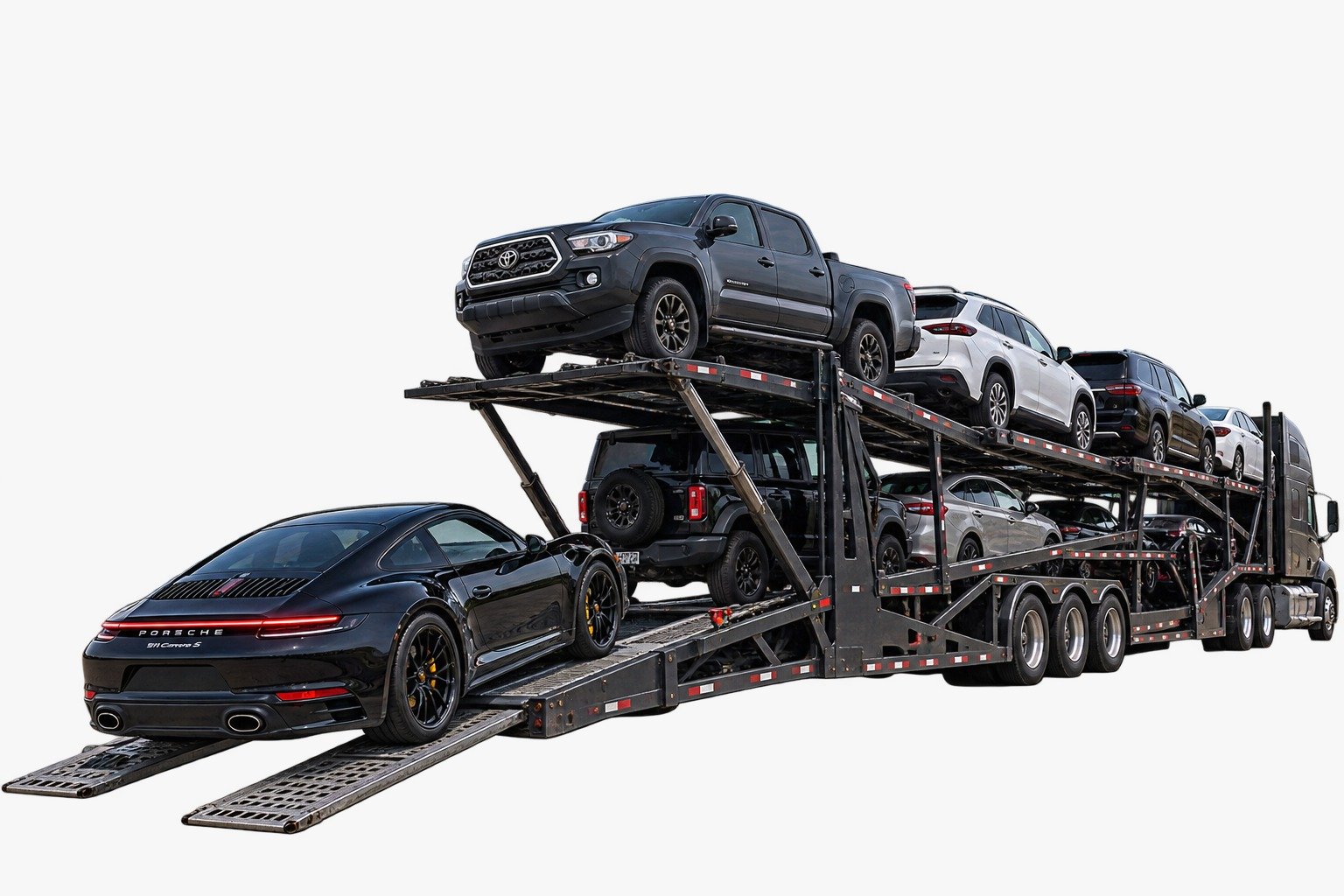
The vehicle transport driver calls upon arrival and positions the transport carrier in a safe, level staging area with hazard lights engaged and wheel chocks or hydraulic ramps deployed.
Identity and Vehicle Verification
You and the driver confirm the vehicle's year, make, model, licence plate, and Vehicle Identification Number (VIN) against the dispatch paperwork so the right unit is logged for transit.
Joint Pre-Shipment Condition Inspection
You walk around the exterior together to note any existing scuffs, dings, hail marks, or glass chips on the vehicle condition report while recording baseline photographs.
Reviewing and Signing the Bill of Lading (BOL)
Both parties review the inspection markings, odometer reading, and origin/destination terms before signing the Bill of Lading. You receive your copy as your official pickup receipt.
Key Handover and Trailer Loading
You hand over one set of vehicle keys, and the driver carefully drives—or winches, for non-running units—the vehicle onto the carrier deck, securing each tire with over-the-wheel soft straps.
Inside the Car Pickup Inspection and Bill of Lading (BOL)
The pre-shipment inspection is the single most important safeguard in the entire vehicle shipping process. It establishes an objective, mutually agreed record of your vehicle's cosmetic and operational condition at the exact moment custody transfers to the carrier.
How Do Car Transporters Inspect Vehicles Before Loading?
During a professional car pickup inspection, the driver performs a systematic 360-degree walk-around with you. Using standardized condition diagram codes, the driver marks any pre-existing imperfections across major exterior zones:
- Front and rear bumpers: Stone chips, curb scrapes, scuff marks, or cracked valances.
- Hood, roof, and trunk lid: Denting, hail impressions, paint oxidation, or clear-coat peeling.
- Doors, fenders, and quarter panels: Door dings, scratches, rust spots, or misaligned trim.
- Windshield and windows: Star cracks, stone chips, or wiper blade scratches.
- Wheels, tires, and lower rocker panels: Curb rash on alloy rims, missing centre caps, or ground-clearance scrapes.
Alongside the diagram, modern carriers capture digital vehicle photographs from multiple angles and log the current odometer mileage. According to consumer auto guidance from the Canadian Automobile Association (CAA) and insurance best practices outlined by the Insurance Bureau of Canada (IBC), keeping thorough pre-transit condition records and confirming your personal auto policy's transit provisions protects you throughout any interprovincial move.
Understanding Your Bill of Lading
The Bill of Lading (BOL) serves two legal and operational purposes: it is both your official receipt proving the carrier received your vehicle and the binding contract of carriage detailing origin, destination, and pre-existing condition notes. Never sign a blank or incomplete BOL. Verify that every pre-existing mark noted by the driver matches what you see on the vehicle, confirm the destination contact details are accurate, and keep your paper or digital copy safely until final delivery inspection is complete.
What Documents Are Needed for Car Shipping Pickup (And Do You Need to Be Present)?
Customers purchasing vehicles from out-of-province sellers or coordinating fleet movements frequently ask what documents are needed for car shipping pickup and whether they must attend in person. For domestic shipments within Canada, paperwork is straightforward, though requirements differ slightly if a vehicle is crossing an international border.
Domestic Canadian Shipments
For provincial-to-provincial transport inside Canada, you typically need:
- Booking confirmation or dispatch order reference.
- Valid government-issued photo ID for the person releasing the vehicle.
- Copy of provincial vehicle registration or bill of sale (helpful for dealership/auction releases).
- One working set of keys (ignition, door, and trunk/fob).
Designated Representative Option
If you cannot attend the pickup appointment personally, you can appoint an authorized representative—such as a family member, neighbour, dealership coordinator, or fleet manager—provided they:
- Are at least 18 years old with valid photo ID.
- Have the vehicle keys and release authorization.
- Are authorized by you to inspect the car and sign the BOL on your behalf.
If your shipment involves cross-border movement into or out of Canada rather than purely domestic transport, additional customs clearance paperwork—such as ownership titles, export declarations, and Canada Border Services Agency (CBSA) compliance forms—must be cleared in advance before a carrier can load the vehicle.

How the Vehicle Pickup Process Varies by Transport Method
Not every shipment uses the exact same trailer or loading procedure. Your selected service level—whether standard open carrier, enclosed protection, or rail intermodal—shapes how and where the auto transport pickup takes place. Exploring Optixtrace's vehicle transportation services helps match the right equipment to your vehicle type and schedule.
| Transport Method | Where Pickup Occurs | Loading & Equipment Highlights | Best Suited For |
|---|---|---|---|
| Open Auto Transport | Door-to-door (or nearest safe wide street/lot) or regional terminal | Multi-vehicle open-air hydraulic ramps with soft wheel tie-downs | Daily drivers, family SUVs, pickup trucks, and dealership inventory |
| Enclosed Auto Transport | Door-to-door or private commercial facility | Hard-sided enclosed trailer with hydraulic liftgates or low-angle ramps | Luxury vehicles, classic collectibles, exotic sports cars, and low-clearance builds |
| Rail Vehicle Transport | Designated regional rail yard or local truck shuttle to rail terminal | Multi-level enclosed railway auto racks after initial inspection | Long-distance cross-Canada routes between major metropolitan hubs |
| Flatbed / Specialized | Direct residential, commercial, or job-site access | Single- or multi-car rollback deck with winch capability | Commercial vans, oversized units, or non-running vehicles |
Open vs. Enclosed Carrier Pickups
For everyday sedans, crossovers, and light-duty trucks, open car transport is the industry standard across Canada. Drivers load vehicles onto upper or lower decks using precision hydraulic ramps and secure all four tires without stressing suspension components. If your address has tight residential access, door-to-door open transport allows the driver to meet you right at your curb whenever safe, or at a nearby wide intersection.
When shipping high-value, vintage, or low-ground-clearance automobiles, enclosed vehicle transport adds full weather and road-debris shielding from the moment of pickup. Many enclosed trailers feature horizontal hydraulic liftgates that raise the car level with the trailer floor—eliminating steep ramp angles for low front splitters.

Terminal and Rail Transport Pickups
For major long-haul corridors—such as Vancouver to Toronto car shipping—rail vehicle transport offers a dependable cross-country option. In a terminal-to-terminal rail shipment, you drop your vehicle off at a secure origin rail compound where staff complete the condition report and BOL before loading the car onto an enclosed railway auto rack. Alternatively, a local carrier can pick up your vehicle at your door and shuttle it directly to the rail terminal.
Frequently Asked Questions About Vehicle Pickup
Most vehicle pickups take between 20 and 45 minutes from the driver's arrival to departure. This allows time for the walk-around condition inspection, taking baseline photographs, completing and signing the Bill of Lading, and carefully loading and strapping the vehicle onto the transport carrier.
Either you or an authorized adult representative (18 or older) must be present at pickup. Whoever releases the vehicle needs to provide the keys, participate in the pre-shipment walk-around inspection, and sign the Bill of Lading on your behalf.
Multi-vehicle carriers require wide turning space and high overhead clearance. If your street has low tree branches, narrow lanes, parked-car congestion, or local commercial truck restrictions, your driver will coordinate a convenient meeting point nearby—such as a large shopping centre parking lot or wide commercial road—for safe loading.
It is strongly recommended to empty the cabin and trunk completely before pickup. Auto transport carriers are regulated to haul motor vehicles rather than personal household goods, and loose items can shift during transit or add excess axle weight.
Yes, provided you disclose the vehicle's inoperable status when booking. Dispatch will assign a carrier equipped with a heavy-duty winch and appropriate deck placement, and the vehicle must still roll, steer, and brake safely for loading and unloading.
Preparing for a Smooth Vehicle Handover
Understanding every stage of the car shipping pickup process turns what might feel like a complex logistics event into a straightforward, predictable handover. By washing your vehicle beforehand, clearing personal items, keeping roughly a quarter tank of fuel, and reviewing the pre-shipment inspection report carefully before signing the Bill of Lading, you set the stage for a seamless transport experience anywhere in Canada. If you have questions about preparing a specific vehicle or coordinating a multi-vehicle pickup, you can always reach out to the Optixtrace support team for tailored guidance.
Looking to Ship Your Vehicle Across Canada?
Whether you are relocating between provinces, transporting a dealership purchase, or shipping a specialty vehicle, Optixtrace coordinates reliable door-to-door and terminal-to-terminal auto transport across Canada.
Get a Free Car Shipping Quote